Emergency Eye Wash and Shower Testing to AS 4775:2026 in Central Queensland
An emergency shower is one of those bits of kit nobody thinks about until they need it. Then, with a splash of caustic down their front, they want two things: plenty of clean water, and no surprises. A shower that coughs out a dribble of rusty brown water is not the surprise anyone is after.
That is why RPS Fire now tests emergency eye wash stations and safety showers to the new AS 4775:2026 standard. We have the calibrated test equipment and qualified people to check that your units actually do their job, and the paperwork to prove it.
What is AS 4775:2026?
AS 4775 is the Australian Standard for emergency showers, eye wash and eye/face wash equipment. It sets out how the equipment should perform, where it should be installed, and how it should be maintained and tested.
The previous version, AS 4775-2007, had been in place for nearly 19 years. It was replaced in June 2026 by AS 4775:2026, now titled Emergency shower, eyewash and eye/face wash equipment and drench hoses. Changes flagged during the public consultation included guidance on sizing for users with a disability, the materials used in plumbing components, and the design and manufacture of metal and plastic parts.
In plain terms: the rules got a long-overdue update, and the testing needs to match. If your last report still quotes the 2007 standard, it is worth having a fresh look.
Does your workplace need emergency eye wash or shower equipment?
If your people handle chemicals that can burn, irritate or damage eyes and skin, the answer is very likely yes. Under Queensland work health and safety law, businesses must manage the risks from hazardous chemicals, and emergency showers and eye wash stations are one of the most common controls. Around Central Queensland we see them at:
- Mine sites, workshops and wash bays
- Water and wastewater treatment plants
- Pool plant rooms and chemical stores
- Agricultural chemical and fertiliser stores
- Battery charging areas
- Laboratories, schools and hospitals
- Food processing and meatworks
Your safety data sheets are a good place to start. If they say "flush eyes with water for at least 15 minutes", you need something better than the tap in the lunch room.
What does an RPS Fire eye wash and shower test involve?
We don’t just pull the handle, watch it splash and tick a box. Every unit is tested and measured against AS 4775:2026.
Eye wash and eye/face wash units
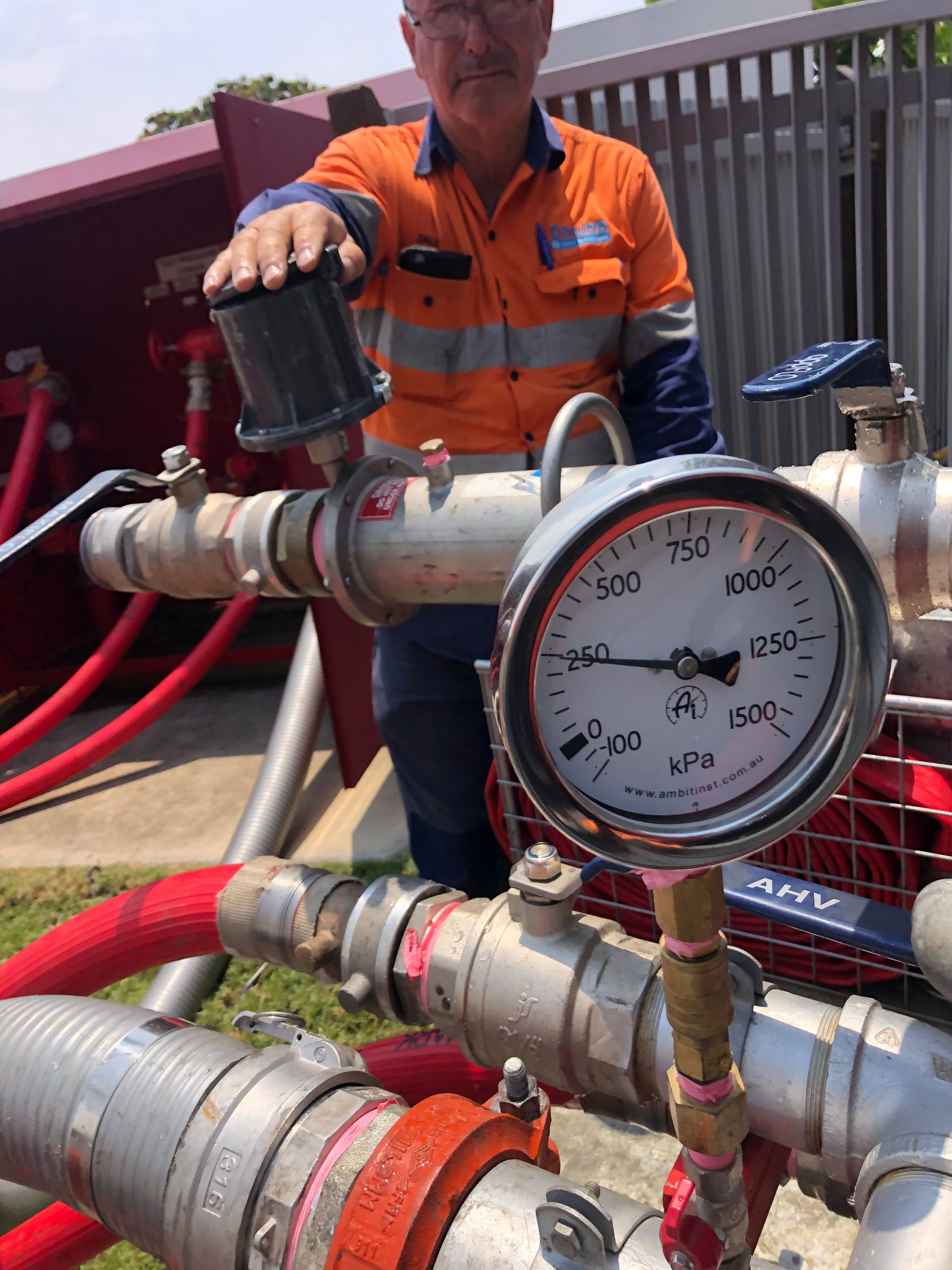
We use a calibrated eyewash gauge to check the spray pattern. The water needs to cover both eyes at the same time, at the right height and width, with a gentle flow. Too weak and it won’t flush the eyes properly. Too strong and it can do more harm than good. We also check the dust covers, the push or pull activation, and that the valve stays open on its own so the user has both hands free to hold their eyes open.
Safety showers
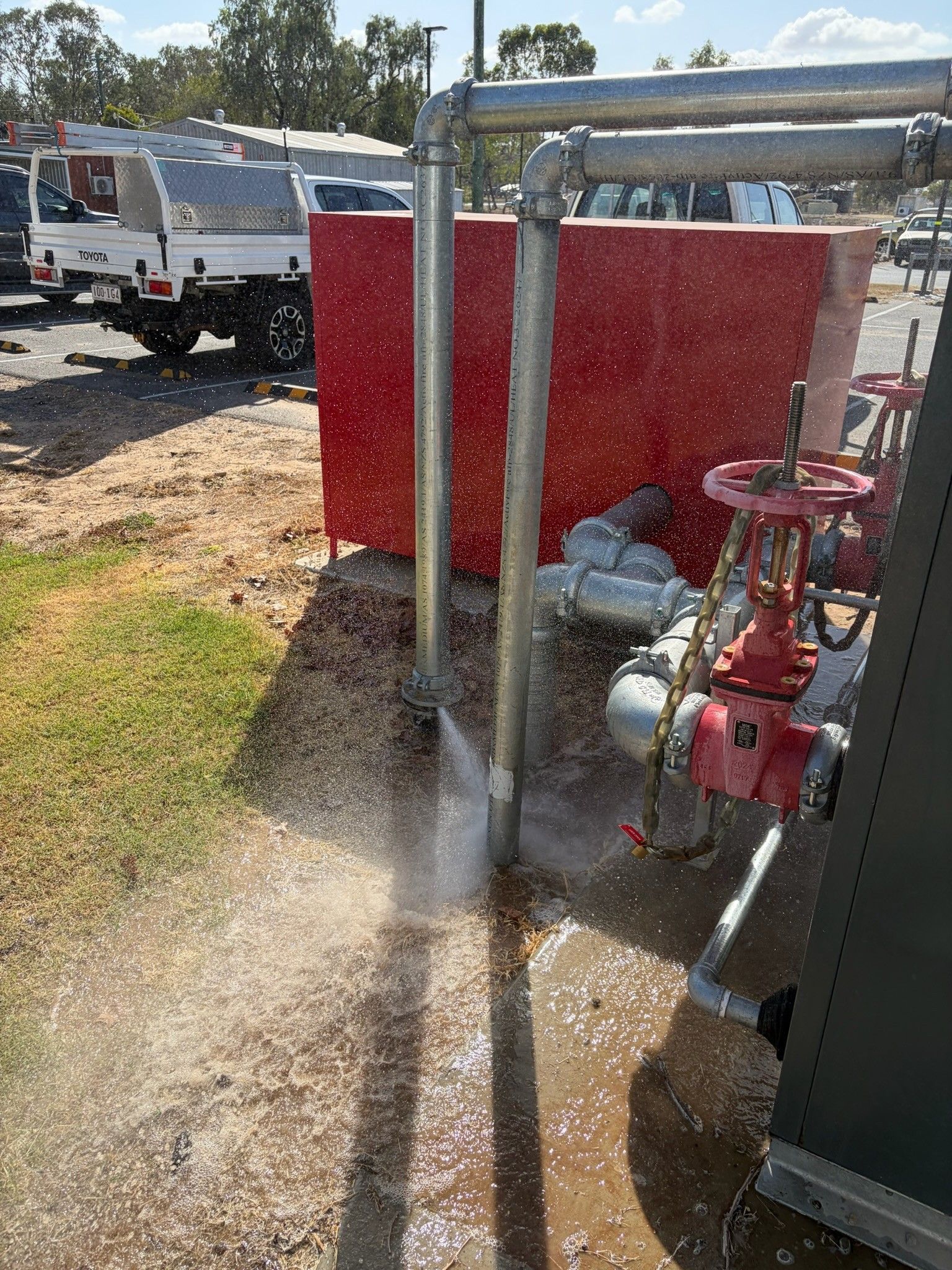
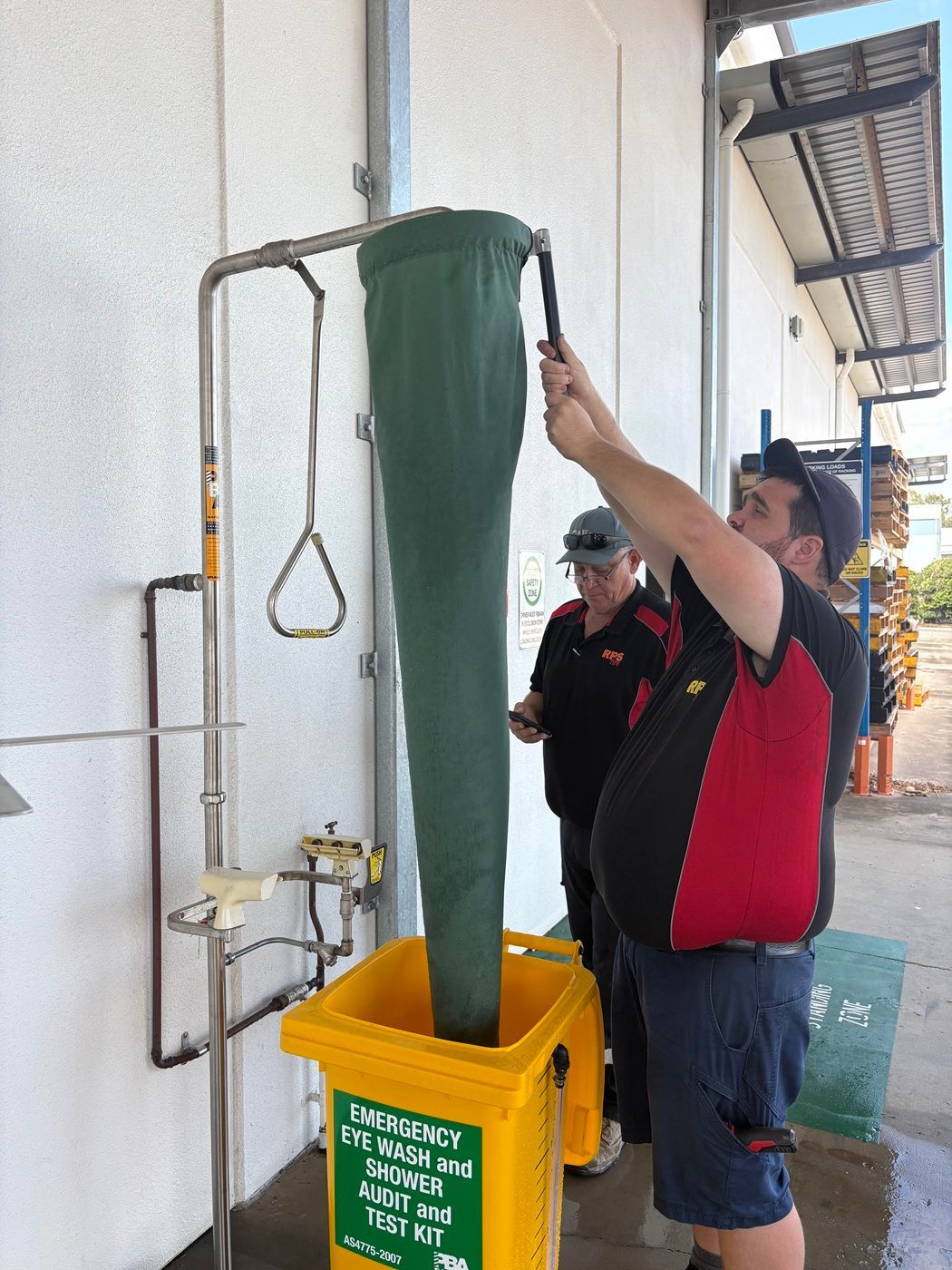
For showers, we use a flow test sock that directs the full flow into a calibrated test bin. We time it on the spot to measure the actual flow rate in litres per minute. That beats "she looks about right" every time, and it means no one on your site gets drenched (except sometimes our technician).
Everything else that matters
- Water temperature. The standard calls for tepid water. In a Central Queensland summer, a supply pipe running across a tin roof can deliver water hot enough to cook prawns. We check it.
- Activation. Valves must open quickly and stay open without the user holding them.
- Location and access. The unit needs to be easy to reach, with a clear path. A pallet of drums parked in front of the shower is a fail.
- Signage, lighting and drainage. People need to find it fast, see it at night, and not slip over once it is running.
- Condition. Corrosion, blocked heads, leaks, damaged pull rods and missing parts.
- Records. Each unit is tagged, and you receive a written report listing results and any defects.
How often should eye wash stations and safety showers be tested?
For plumbed units, weekly activation by your own staff has long been the rule. It flushes out stale water and confirms water actually reaches the head. Keep a simple log; it takes 30 seconds and saves a lot of explaining after an incident.
On top of that, a full inspection and flow test against the standard should be carried out at least once a year by a competent person. That is the part we take off your hands.
Common faults we find
After years of testing, the same problems pop up again and again:
- Low flow from partly closed isolation valves or blocked shower heads
- Eye wash streams that hit the forehead instead of the eyes
- Hot water from exposed pipework, especially in summer
- Missing or broken dust caps
- Access blocked by stock, bins or equipment
- Faded or missing signage
- No record of weekly activation
Most of these are cheap and quick to fix. Finding them during a test is far better than finding them during an emergency.
Why choose RPS Fire for eye wash and shower testing?
RPS Fire is a licensed fire protection provider (QBCC Licence No. 1245534) and has worked across Central Queensland since 2012. Our multi-disciplined team includes licensed plumbers, so if a unit needs repairs, the same team can fix it. No juggling contractors.
If we already service your fire equipment, we can test your eye wash stations and showers in the same visit. One booking, one invoice, one less job on your list.
We service sites across Central Queensland, including Barcaldine, Biloela, Blackall, Blackwater, Emerald, Gladstone, Longreach, Monto, Moura, Rockhampton and Yeppoon.
Frequently asked questions
Do I have to replace my equipment because of the new standard?
Not necessarily. Plenty of existing units will still perform well. We test what you have, tell you how it measures up against AS 4775:2026, and recommend work only where it is actually needed.
Can my staff do the testing themselves?
Your staff should carry out the weekly activation. The annual flow test and inspection needs calibrated equipment and someone who knows the standard, which is where we come in.
What about portable or self-contained eye wash units?
These need checking too, including fluid levels and expiry dates. We can include them in the same visit.
Want to know where the rest of your building stands? Read how to schedule a fire safety audit, or check our fire safety FAQs.
Not sure if your eye wash stations and showers would pass? Call RPS Fire on 07 4939 5597 or email admin@rpsfire.com.au to book an AS 4775:2026 test for your Central Queensland site.