Annual Occupier's Statement in Queensland: What Central Queensland Building Owners Need to Know
Nobody enjoys opening a notice of inspection from the Queensland Fire Department. It sits somewhere between a tax audit and a flat tyre on the Bruce Highway. A large Rockhampton service company got one recently, and further down we'll show you how we got them ready.
Most of the time, though, the paperwork that gets people into trouble is simpler: the Annual Occupier's Statement. If your building has fire safety equipment, someone has to sign it every 12 months. Here's what it is, who signs it, when it's due, and how to get it right first time.
What is an Annual Occupier's Statement?
It's a yearly declaration to the Commissioner of the Queensland Fire Department (QFD) confirming that every prescribed fire safety installation in your building has been properly maintained over the past 12 months. That covers things like extinguishers, hose reels, hydrants, sprinklers, fire alarms, exit signs, emergency lighting and fire doors.
The rules are in section 55A of the Building Fire Safety Regulation 2008 and Queensland Development Code (QDC) MP 6.1. The form itself is Schedule 2 of MP 6.1. It lists each installation, the standard it's maintained to (usually AS 1851, or AS/NZS 2293.2 for emergency lighting), whether any critical defect notices were issued during the year, and when they were fixed.
Does it apply to your building?
If you run a commercial, industrial, retail, accommodation or multi-unit residential building with fire safety equipment, almost certainly yes. There are two main exceptions:
- Houses (class 1a) and their sheds and garages aren't covered.
- Buildings treated as part of a coal mine or mine under Queensland's mining safety laws are excluded from MP 6.1's maintenance rules. They're managed under mining legislation instead.
That second one matters in the Bowen Basin. A building on the mine lease may sit under mining law, but your office, workshop or depot in Emerald, Moura or Blackwater almost certainly doesn't. If you're not sure, ask us before you assume you're exempt. "I thought it didn't apply" isn't a great conversation to have with an inspector.
Who is responsible, and who can sign?
The occupier is responsible. Under the Fire Services Act 1990 that's the owner, the tenant, the person in charge of the premises, or anyone managing it or running a business from it. In practice:
- Tenant: responsible for the installations it maintains under its lease. In multi-tenant buildings, the owner or body corporate usually looks after shared systems like hydrants, sprinklers and the fire panel. Check your lease so nothing falls through the gaps.
- Owner-occupied: the owner.
- Vacant building: the owner.
- Body corporate: the committee decides who is authorised to sign for it.
The statement can be signed by the occupier or by someone they authorise, such as a director, manager, committee member or their appointed Fire Safety Adviser. Your fire contractor can do the legwork. Just remember that authorising someone else to sign doesn't hand over the legal responsibility. That stays with the occupier.
When is it due, and where do you send it?
There's no single statewide date. Your first statement is due within one year of moving in, and each one after that within one year of the last. From the due date you have 10 business days to send a copy to the QFD Commissioner, by email to occupier.statements@fire.qld.gov.au or through your regional QFD office. Keep a copy with your maintenance records for at least two years.
Not sure of your date? Check your last statement. If you've just taken over a building, the previous occupier must hand over the fire safety records within one month of leaving, so chase them up. If you can't find any statement at all, treat it as overdue and start now.
What records do you need before you sign?
The statement is only as good as the records behind it. Before you sign, make sure you have:
- Service records for the full year, each showing the installation, the technician's name and licence number, the date, what was done, the results and any repairs
- The AS 1851 annual condition report
- Form 72 (periodic testing and maintenance) for hydrants and sprinklers, which your contractor must give you within 10 business days of the work
- Every critical defect notice from the year, with proof it was fixed, such as a rectification report or invoice
You also need a copy of your records kept in the building and another somewhere secure off site. An electronic copy is fine as long as you can get to it easily. If a record is missing, you can't honestly declare that installation was maintained.
Your whole year in one place: the RPS Fire client portal
Every RPS Fire client gets access to our online client portal, built on Uptick, the fire protection software used by hundreds of fire companies across Australia and New Zealand. Instead of digging through a filing cabinet, an inbox or the glovebox of the ute, everything you need before signing your statement is in one place, any time:
- A year-at-a-glance view of your routine servicing, showing what's been completed, what's coming up, and anything done late or still overdue
- A defect register showing every open and resolved defect, sorted into critical, non-critical and non-conformance, so you can see straight away whether anything is stopping you from signing
- Defect quotes you can review and approve online, which helps you get repairs done inside the one-month window
- Your service reports and documents, ready to view or download, plus monthly maintenance reports
- For clients with several sites, a map of all your properties, colour-coded by the most serious open defect at each one
Because your records are stored securely online and easy to get to, the portal also covers the requirement to keep a copy of your fire safety records somewhere other than the building. If QFD walks in, you can pull up a full year of records in minutes.
Can you lodge with unresolved critical defects?
No. Fix them first. A critical defect is one likely to stop an installation working and put people at serious risk in a fire, like a failed hydrant pump or a fire alarm system that's down. One faulty extinguisher among several usually isn't one. Your technician must give you a critical defect notice within 24 hours of finding it.
The statement asks for the date each critical defect was fixed, with the notices and proof of repair attached. Signing while one is still open means declaring something that isn't true.
Other repairs found during maintenance must be done within one month, unless you have a reasonable excuse. The regulation's own examples are a remote site no qualified person could get to, and complex work or waiting on parts. Both happen in Central Queensland, so if they apply to you, write down the reason and talk to us well before your due date.
What happens if you get it wrong?
Failing to prepare, keep or lodge the statement carries a maximum penalty of 20 penalty units each, currently $3,454. The maintenance failures that usually sit behind a missing statement carry up to 30 penalty units ($5,181). QFD officers can audit buildings and issue on-the-spot fines.
The bigger risk is under the Fire Services Act 1990, which requires occupiers to keep all prescribed fire safety installations maintained at all times. The penalty is up to 100 penalty units ($17,270) for a standard breach, rising to 2,000 penalty units or three years' jail if a failure contributes to multiple deaths. Company executives can also be held personally liable.
And after a fire, your insurer will ask for your maintenance records. Gaps can make a claim much harder.
Case study: from notice of inspection to inspection-ready
A large Rockhampton-based service company came to us after being served a QFD notice of inspection. The occupier's statement was only part of it. An inspection looks at the whole picture: staff training, fire wardens, evacuation practice and the maintenance records behind every installation.
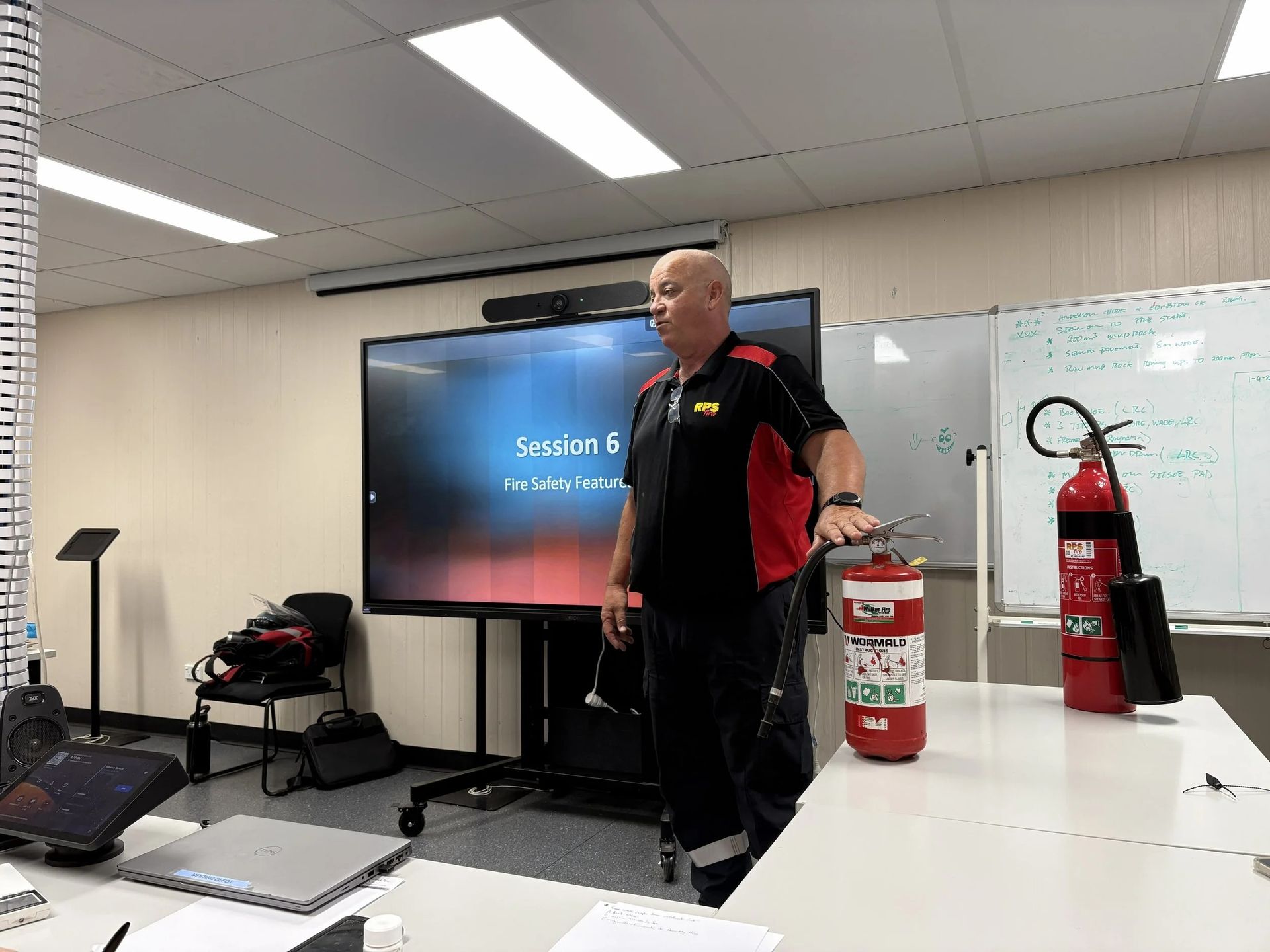
Graham Read, our Fire Safety Adviser, has spent 30 years with QFD and in the fire industry, so he knows exactly what an inspector looks for. Within four weeks he had taken the site through the entire process:
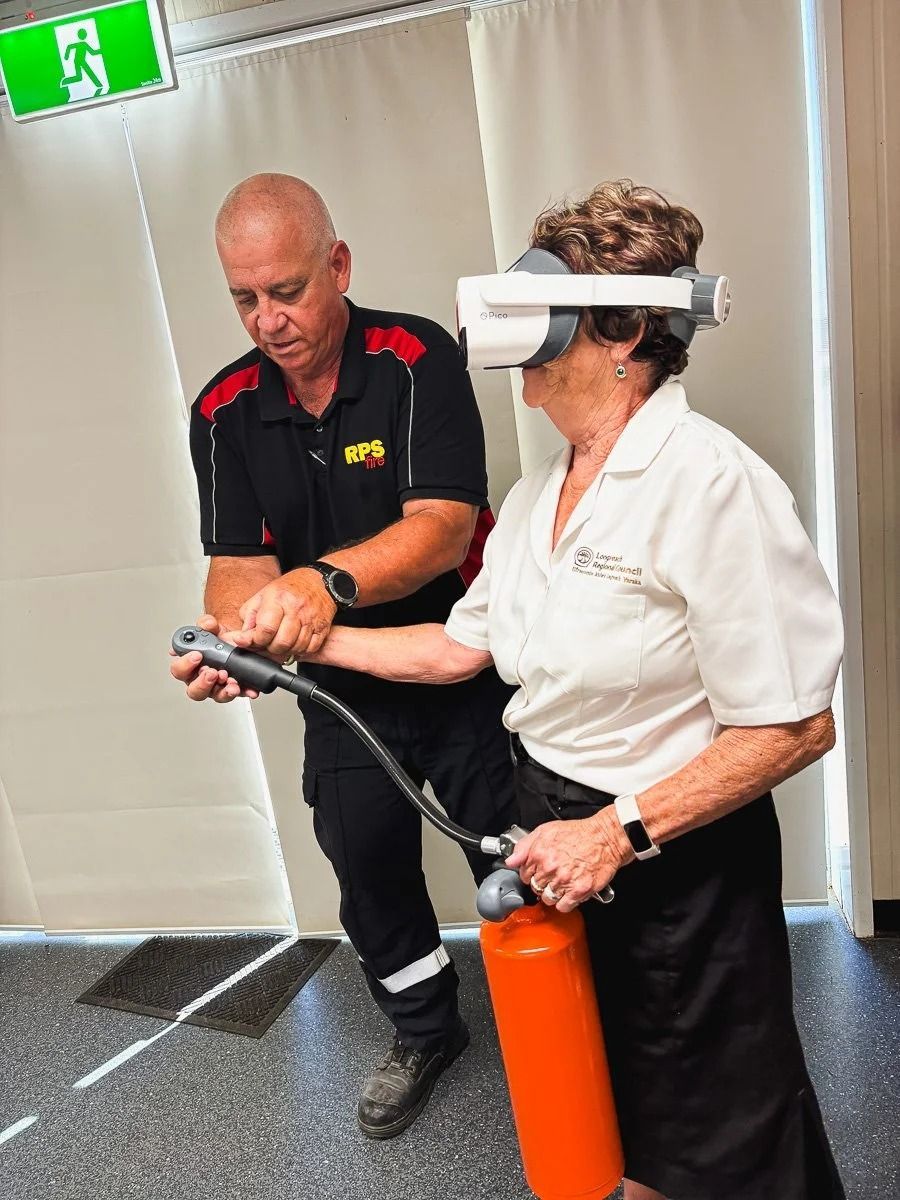
- Trained every staff member on site in General Evacuation and First Response Instruction (GEFRI)
- Trained the site's fire wardens
- Completed a full fire safety audit of the site's installations and records
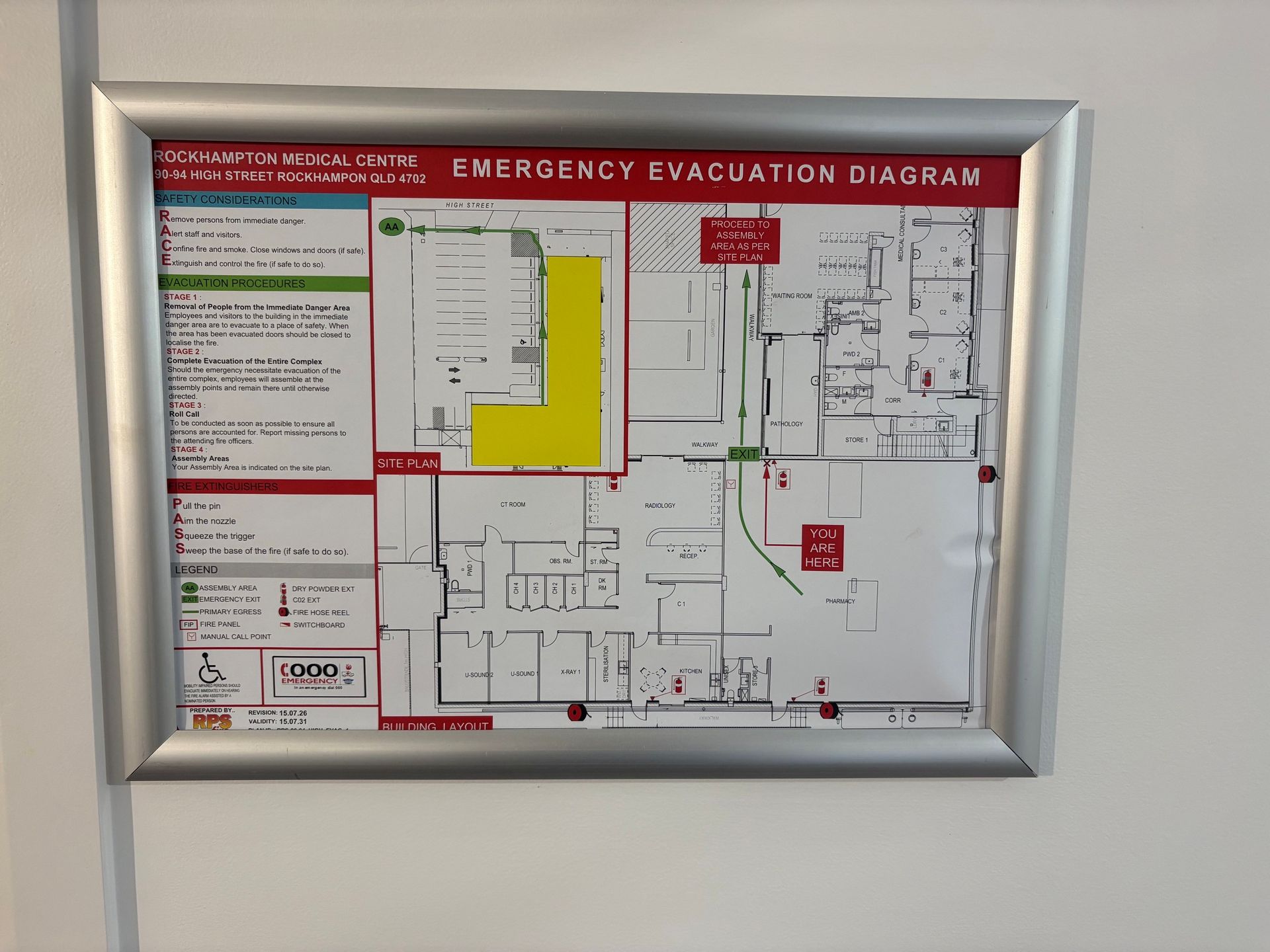
- Wrote the site's emergency plan, covering the fire and evacuation plan Queensland law requires
- Chaired the emergency planning committee and prepared the minutes
- Run the annual evacuation practice, which must be held and recorded at least every 12 months
- Put all the fire safety documents in order, ready for QFD
Four weeks, from a notice on the desk to a site ready for inspection. Graham will be on site with the client when QFD inspects, and he's been appointed the site's Fire Safety Adviser for the next 12 months. Their next statement, training and evacuation are already planned, not left to a mad scramble.
The lesson: it's a lot easier, and cheaper, to have this sorted before the notice turns up. If one has already landed, call us straight away. You can also read more about fire safety training for staff.
How RPS Fire helps
We make the statement the easy part by getting the year's work right:
- Scheduled AS 1851 servicing across all your installations, so nothing is missed
- Complete records with technician names, licence numbers, results and repairs, plus Form 72 for hydrants and sprinklers
- Fast repairs by our own multi-disciplined team, covering water-based systems, fire alarms and detection, emergency and exit lighting, special hazard suppression, passive fire and portable equipment, so you're not waiting on a second contractor
- Reminders before your due date, with the statement prepared and ready to sign
- 24/7 access to your records, defects and quotes through our client portal
- Fire Safety Adviser services: with 30 years across QFD and the fire industry, Graham can audit your full year of records and, where you authorise him, sign the statement for you. He can also be appointed as your ongoing FSA, covering GEFRI, fire warden training, evacuation practice and your annual statement.
RPS Fire is a licensed fire protection provider (QBCC Licence No. 1245534), licensed across every fire protection class: water-based, fire electrical, emergency lighting, special hazard, passive and portable. We have worked across Central Queensland since 2012, including Barcaldine, Biloela, Blackall, Blackwater, Emerald, Gladstone, Longreach, Monto, Moura, Rockhampton and Yeppoon.
Due for a deeper check? Read what happens during your 5-year fire safety compliance inspection, or find out how to schedule a fire safety audit if you're not sure where your building stands. Got another question? Our fire safety FAQs cover servicing, training and equipment hire.
Not sure when your statement is due? Send us your building address and we'll check it for you, free. Received a QFD notice of inspection? Call us today. Phone
07 4939 5597 or email
admin@rpsfire.com.au.